Showing posts with label dance. Show all posts

Sunday, April 13, 2014

Dance chose me: choreographer Stephen Petronio writes his life

Above: choreographer and Aries, Stephen Petronio
Below: Stephen Petronio Company dances
I Drink the Air Before Me (2010)
(photos by Sarah Silver)

Confessions of A Motion Addict
by Stephen Petronio (self-published, 2014; 288 pp.)
ISBN-13: 9781492736547

reviewed by Eva Yaa Asantewaa, InfiniteBody


I should not have been surprised to learn that Stephen Petronio self-published his memoir, Confessions of A Motion Addict. While the dramatic arc of this world-famous artist's life and career--not to mention the literally boldfaced names he can and does drop, sometimes scandalously--should make any publisher salivate, I can't imagine Petronio having much patience for any middleman or woman dictating how he should tell his own story. The book, all 288 pages of it, is Petronio, through and through. As Spike Lee would say, it's his joint.

The first sixty or so pages, dense and filling, plunge readers deep into childhood and teenage history: richly remembered Italian-American feasts, furtive sexual experiments, rollercoaster drug experiments, precocious insights into the personalities orbiting him, scary dreams, passion, restlessness and, always, a sense of outsider status. By page 67, his artistic fate is sealed when Contact Improvisation makes a serious pass at this newbie Hampshire College student. He subsequently forgets all about taking pre-med. "Inner motor" revved up, mind blown....
I look down my body, and I realize...it's there. I have a body and it is mine. I have a body and do not understand its power or potential or the invisible stories pressing at my skin. I desperately want to move.
Next up? Judson Dance Theater's Steve Paxton, a guest artist at Hampshire. "I am the bastard child of Steve Paxton and Trisha Brown," Petronio will tell us later on, citing his two greatest influences. Brown is, after all, the woman for whom he harnessed up and walked down the wall of a 14th Century French monastery (Man Walking Down the Side of a Building), a feat he repeated a few years ago at the Whitney Museum.

But there's still a lot of getting there until he's there. Petronio takes us along on an adventurous hitchhiking trip through Canada and the West Coast. The young man, exposed to the rigors of nature and the unpredictability of the human animal--enjoyed unexpected kindness of strangers along the way, the occasional minor bummer and one hugely, hugely major one. He's headstrong and lucky and an Aries, and maybe only an Aries would attempt this type of trip in this type of way--"Like all good Aries, I must try to try on every possible lifestyle as my next incarnation"--and get through intact.

Petronio made it through a lot of stuff intact--personal losses, the early years of the AIDS crisis, displacement, along with a lot of other artists, from a gentrifying SoHo, 9/11, a sex-and-drugs lifestyle that could make a rock star look like a rank amateur.
You see the dancer leap and bound, defy gravity and press the boundaries of human movement possibility, yet the mechanics and sensations of these efforts are for the most part concealed. In the mainstream forms of dance, artists often paint a smile over the top of Herculean efforts, but their soul is gritting and grimacing for dear life. The dancer has come to represent the ethereal, outside the law of physics, but we live on the earth and the pull of gravity is definitive. We work with it, attempt to defy it, and yes, we eat real food, pant, smoke, drink, eliminate, copulate, get married, divorced, addicted and healed. We are human. We sometimes break. And it all hurts at some point or another. And we all do something to deal with that pain. Some more than others.
He has chosen to reveal the pull of gravity and the mechanics of living, to conceal nothing, whether it be a personal lapse or a controversial opinion. And with it all, his story provides the kind of energetic rush one comes to expect from his work on the stage.

Learn more about Confessions of A Motion Addict here.

Eva Yaa AsantewaaInfiniteBody

Thursday, April 10, 2014

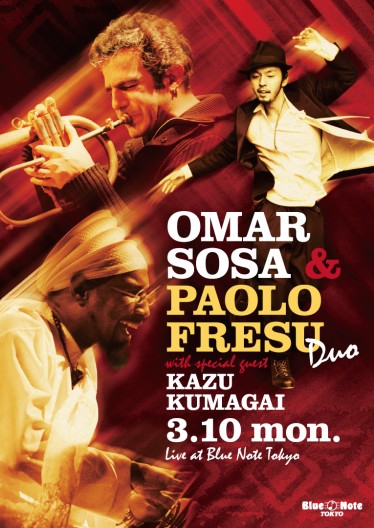
Kazu Kumagai: Catalyst of Tap [UPDATE]

Kazu Kumagai
(photo by Leslie Kee)

Kazu Kumagai: Catalyst of Tap

by Eva Yaa Asantewaa

It’s no small matter when a tap expert like Tony Waag, American Tap Dance Foundation’s Artistic and Executive Director, feels comfortable agreeing with The Village Voice who hailed you as “the Gregory Hines of Japan.”

“Kazu Kumagai is not just a great tap dancer,” Waag says. “He is also a very kind, conscientious and devoted advocate for tap dance and knows how important the art form is internationally.”

Kumagai--who lives in Park Slope, Brooklyn with his wife Mari, a singer, and his four-year old daughter--happens to be one of my favorite dancers of any kind. After last year’s Tap City festival, where he appeared in Waag’s popular Tap Internationals evening at Symphony Space, I noted that Kumagai “channels dissonance and passion, taking tap to a stormy place beyond the familiar sunshine,” and I included that solo performance, Journey to the Soundscape, in my list of “most memorable arts experiences of 2013” (InfiniteBody, December 24, 2013).

Born and raised with his older sister in Sendai–a moderate-sized coastal town, a little less than 190 miles north of Tokyo–Kumagai took an early interest in the arts. His parents owned what was then a rarity in Japan–a coffee shop, serving a Japanese clientele–and he played there, as a youngster, around what he calls “unusual people.” These were mainly artists, poets and musicians. But, then again, his parents were also, he says, “kind of unusual.”

“My father was the first person who started roasting coffee in Sendai, a pioneer in the café business, about 40 years ago.”

Kumagai saw his first film footage of tap dancers thanks to jazz musicians he met at the café. He started tap dancing himself at 15 but, he says, didn't have a session with a live musician until he came to New York at age 19.

Of all the arts, what drew him to dance?

“I think I liked physical movement. When I was 5 or 6, I saw Michael Jackson on TV, and that had a great impact on me. I loved how he expressed himself–not just singing but the whole energy. When he got the Grammy, he mentioned the great dancers that he was influenced by--Fred Astaire and Sammy Davis, Jr., and that was a first, small introduction for me. I wanted to tap, but I couldn’t find any tap class in my hometown. My mother called several schools, but there was no tap class. I kind of gave up.

“Then I started doing some martial arts and soccer, football. I was serious about those things. But when I became 15, I saw Gregory Hines's movie, Tap, on TV.

“I carried my passion for tap dancing since I was little and started looking again and finally found one school that included tap. It was impressive. Every student was older–maybe thirties or forties, most of them women.

“I was fortunate to meet a good teacher, in his twenties, who had studied in Tokyo and come back to Sendai. He also loved the style of Gregory Hines, but he couldn’t teach that style because no one wanted to do it at that time.”

Theatrical tap, such as we would see on Broadway, was more readily accepted.

“Students went for exercise but were not really serious about it. I was really serious from the beginning, and he saw that. We became close. I went there all the time, even when I had regular school. I just went to dance school!”

A new home

“My hometown was like.... Have you seen the movie Billy Elliott? A man was supposed to be a banker. Or you have to go to university. Now it’s looser. But when I was growing up, you had to have a certain image. Tokyo was more open, but Sendai was more suburban with an intense social pressure within neighborhoods. My sister went through a tougher time, being compared with other kids. But, somehow, I grew up more open. I was kind of lucky.

“I was in a strict school. One time I was in a meeting with my teacher, and I wrote which school I wanted to attend, and I wrote tap dancing as my hobby. The teacher really couldn’t understand what I was doing. ‘You’re not supposed to dance; you’re supposed to study.’”

The teacher gave him an ultimatum: quit dance or quit school. But then he asked him to dance “right now.” Kumagai did as he was told.

“He looked impressed, but he was a stubborn man. ‘You have to go to college, but maybe you can dance as a hobby because you can’t make a living as a dancer.”

Kumagai lacked role models for his dream. But through his determination, he would go on to serve as a role model for many up-and-coming dancers in Japan. The key? A decision to come to New York despite lack of any connections to the dance world here or much information about how he could get hooked up. He discussed the matter with his parents and told them that he felt ready to search for what he needed.

Acknowledging his love of tap, Kumagai's parents knew that Sendai could not support his goals. “I told them, ‘I’m going to college in the states.’”

He started with learning English in a language school on Long Island, not quite the New York City of his imagining. “Totally different from what I expected,” he says, laughing.

Moving into the city, then, and beginning studies at New York University, he started looking around for a tap school, finding ads for Steps and Broadway Dance Center, still not exactly what he had in mind. Little by little, he began to find his way.

“Charles Goddertz and Barbara Duffy showed me rhythm tap. I met Buster Brown--a legend in the field--when I was hanging out with other tap dancers in a restaurant, and we talked." At the time, Brown was launching his Sunday night tap jam at Swing 46, a jazz and supper club on Manhattan's West 46th Street.

"Gradually, I started finding the community," he says. "I went to National Tap Day and met Peg Leg Bates," who had been a celebrated tap dancer and Catskills resort owner. "I met Savion [Glover] on the street when Bring in 'da Noise, Bring in 'da Funk was running.  1996 was a great year. I was very lucky, a lot of things started to happen, an era of the rise of a new style of tap.

"Gregory Hines was doing a workshop, and I studied with him. I had met him at Fazil’s, a home for tap dancing, and he invited me to practice with him. That was amazing, and we became close. It was an adventure, discovering something new every day. We didn’t have cellphones or Internet back then, but it was much better!”

Young Kumagai's immersion in the New York scene did not permit time for much homesickness. He does remember crying for hours upon leaving Japan but, as soon as he landed in our city, he was ready for a new life. And, it seems, that new life was ready for him.

Kazu Kumagai
(photo courtesy of Kaz Tap Studio)


“There was a workshop called Funk University, a workshop for new dancers for Bring in 'da Noise, Bring in 'da Funk. Ted Levy was teaching, and he was amazing. It was basically for African American dancers because it was their history. But I went there because,” he says, laughing, “I didn’t know!”

“They were young African American dancers, but Ted saw me and gave me an opportunity to study. I started working with them at Fazil’s for three months, every day for seven hours, in the summer without any air-conditioning. But it was great education because it was so different from other schools. He showed not only steps but also history and culture. He spent so much time talking about how tap dancers carry years of struggle, and he sometimes cried because of the prejudice and the painful history.

“That’s when I discovered the meaning of the tap dancer. They danced from their own roots, and I am not from here. I felt a little distant, a little different, but they treated me the same, as a brother. Ted called me Sole Brother. S-O-L-E!"

Although one of the show's producers felt it wasn't appropriate for Kumagai to be in the school and asked him to leave, Levy invited him to continue taking classes.

Kazu Kumagai
(photo courtesy of Kaz Tap Studio)

"Kazu is an amazing musician," says Derick K. Grant, famed tap artist and one of Kumagai's early teachers in New York. "He tends to work twice as hard to be accepted and taken seriously, and it has paid off. He learned as much about us--African Americans--as a people as he did about us as dancers, and that gave him a level of respect for our people and our journey that is unique."

In return, Kumagai was so warmly accepted by Grant and his colleagues that they bestowed a "Black" nickname upon him: Kenyon.

Kumagai, Grant says, took what he learned back to Japan and offered his homeland's dance students an alternative based in authenticity.

"Following his return to Japan in 2002, we started to get an influx of students coming from there who were well prepared and already sound in their foundation." Grant says. "There were a lot of them, which led me to believe that he was inspiring many. That was great for us in tap. He was also very gracious in pointing students in our direction. I, and others like myself, had a great hand in the development of tap dance in Japan--something we are very proud of. Today, they are some of the strongest, most technically sound dancers in the world."

The artist who had persevered despite the lack of local role models not only became a brilliant one for his compatriots; he opened a pathway for them to get the kind of excellent training he had found in the US. Grant acknowledges that Kumagai's "new" style, while exciting the youth of Japan, put him at odds with established teachers there still promoting a lightweight, musical theater approach to the art.

Hank Smith, a tap performer-choreographer and educator, remembers Kumagai from the late 1990s as one of a number of Japanese dancers coming to Brown's jam at Swing 46. Something shifted, though, during the subsequent time Kumagai spent back home in Japan.

"I could tell he'd really developed, not only as a dancer but as a person," Smith recalls. "There was a maturity in his presence. Kazu just seems to be a committed artist and human being who uses his gifts to try and make a difference."

"Tap can be more than just hitting the wood as loud or as fast as possible," Smith says, citing Kumagai's solo work last year in Journey to the Soundscape, an intense, expressive piece that embodied his feelings for his hometown and the Tohoku region where, in March 2011, an earthquake and tsunami caused devastation and massive loss of life.

REUTERS/Yomiuri
Devastation in Sendai, Japan, March 2011
Photo: Reuters/Yumiori

When Michelle Dorrance--Bessie Award winning tap artist who also won a 2014 Alpert Award in the Arts--recently danced with Kumagai in Japan, he took her to visit Sendai. It was his way to share with a friend what he had seen and experienced at the time of Japan's disaster.

"It was important for me to share this feeling with her. I hope she will talk to other people about it. My goal is to make a bridge from New York to Japan, to Tokyo and Sendai. People are still suffering in Tohoku district, and I want more people abroad to know this fact."

His parents stayed on in Sendai during the crisis and, like many people who have made a home in a risky environment, want to remain there. Luckily, they live in Sendai's inner city, away from the heavily impacted coast, although they did have to go several months without gas. Another ongoing concern for the region and nation--the only country that has ever suffered the devastation of atomic bombing--is radiation leakage from damaged nuclear power plants.

"And still they want to keep the nuclear plants," he says. "It's hard to understand."

Kumagai, present in New York during our own crisis, 9/11, draws a saddening comparison between Japan and the US, noting that disasters can swiftly turn people and their governments away from the ideals of peace. Japan's historic non-nuclear weapons policy, imposed by the US after World War II, could end soon, he says, as tensions grow between the nation and its regional rivals in Asia. There isn't yet enough of a vocal, coherent movement to divert Japan's conservative government from a proactive buildup of nuclear arms.

Kumagai, as his career unfolds, chooses to remain mindful of his homeland and hometown. "A lot changed [for me] after March 2011," he says. "What happened in Sendai, it has become myself. As an artist, everything I do becomes dedicated to my hometown--also dedicated to the [tap] masters. These two things are now the most important to me, and I want to keep doing positive things."

The challenges of coming home

After Kumagai's initial, life-opening training in New York, the return in 2002 to Japan's limited scene did not flow easily.

"When I went back, not much was happening in the tap community. However, a conflict between old and new was happening both in the tap community and in Japan in general. They didn’t know what tap really was. It was difficult to readjust. There was no place to practice."

"I had to start from the beginning. I had a part-time job and did street performances. There were some good small jazz clubs, and I started dancing there, a small community in Tokyo where musicians get together. It’s growing in popularity. People hear a rumor and come to see us. At first, many artists were interested in tap: musicians, DJs who liked to have tap dance at their parties or in their performances."

Japan's great jazz trumpeter Terumasa Hino, who had learned tap from his musician/dancer father, caught one of Kumagai's performances and invited him to appear in his shows.

"He saw that, in the past, most Japanese tap dancers couldn’t work with jazz musicians because the style was different. However, he felt a connection with me and knew that jazz musicians and tap dancers share a culture. We toured together in 2004 and 2005."

The exposure from touring with a star of Hino's magnitude drew attention and offers from others in Japan’s music industry.

“I began dancing everywhere–from small hip-hop clubs to concert halls," says Kumagai. "I collaborated with many different kinds of artists.”

A growing appreciation for the intricacies of music affected how Kumagai saw himself as an artist.

"Jimmy Slyde, Buster Brown, Savion Glover, Dianne Walker, they all have their own sound," he says. "I was inspired by their sound, not so much by the visual. Image is important, but always I connect to the sound. For me, that is the greatness of this art form.

"The first time I saw Gregory in Tap, dancing in the jail, he danced for himself. Not so much for performance. And that particular scene still influences me a lot.

"I've heard criticism that the way Gregory danced is not really beautiful, but to me, it’s so beautiful. Jazz musicians, when they play, it’s beautiful. Same as athletes like Michael Jordan. They don’t try to look nice. It’s not about their looks. They devote themselves to their art, and that’s a beautiful thing. I don’t try to impress with how I look. What I love about tap is that a lot of masters can show what’s inside through their dance.

"Tap is a language. When I go to Europe, I don’t speak to the audience, but they can understand. When I went to Senegal, we could communicate."

omar02

How to stay serene amid the busyness of business

"I tour a lot...Japan, Singapore. This month, I’m going to Milan. When I’m in Japan, I go to my studio [KAZ Tap Studio] everyday and practice and teach classes. Here in New York, I go to American Tap Dance Center and practice. But before I do, I take my daughter to school, and that becomes my ritual–an everyday morning walk with her. It gives me a peaceful moment. So many things I can learn from my daughter.

"She dances a lot. She was in my most recent performance. The last night (of a three-night performance), I wanted her to be on stage somehow, because I was showing my life. I just wanted her to walk around, but she started dancing!" Kumagai chuckles at the memory. "It was real nice!"

Perhaps she'll join in again when he finally manifests his next big dream, an evening-length show for New York, his first--to which I say:

Right on, S-O-L-E brother! It's time!

SPECIAL UPDATE

I have just received the following announcement from Traci Mann, Co-Chair of The New York Committee to Celebrate National Tap Dance Day:

The New York Committee to Celebrate National Tap Dance Day is proud to Honor Kazu for his talent and his contribution to the health and welfare of his tap community in Japan. Much like the late great Bill Bojangles Robinson, Kazu is helping people with his talent. He is helping them to over come the Fukashima Disaster with his tap dancing and teaching. I can't think of a more noble thing to do on his part and we hope that he gets the recognition he needs as it will up build what he has accomplished and continues to work at. 

Norman Thomas Auditorium
Park Avenue
New York City
May 24th, 2014
7 pm - 9 pm

BIO

Kazu Kumagai was born in Sendai City, Japan. He started tap dancing at the age of 15 and came to NY at the age of 19. He trained in FUNK UNIVERSITY, the training workshop for the big hit Broadway musical Bring in da' Noise, Bring in 'da Funk. He studied with Ted Levy, Buster Brown, Gregory Hines, Barbara Duffy, and Derick K. Grant.

Since then, he has performed in many New York City downtown clubs, such as The Knitting Factory, Tonic, and the Puppet Jazz Club.

From 2002 to 2010, he performed in Tony Waag’s Tap City, the New York City Tap Festival nine times and was dubbed by The Village Voice as the "Japanese Gregory Hines." In 2006, he was selected as one of Dance Magazine's "25 to Watch."

After Kaz went back to Japan in 2002, he made numerous solo appearances all over the country and collaborated with many artists and musicians, and appeared in several television commercials, such as SONY CYBERSHOT. He also performed in a MIHARAYASUHIRO fashion show in Milan, Italy, where he succeeded in opening up a new field of the arts. In 2008, he opened his first tap dance studio--KAZ TAP STUDIO--in Japan, and has subsequently taught throughout Japan including in his hometown of Sendai City, site of severe damage in the 2011 earthquake and tsunami.

Kaz dedicates his passion and love for the art of tap dance to the great masters such as his mentor Buster Brown, Jimmy Slyde, Gregory Hines and others, as well as to the people of Sendai and the Tohoku region where his family and friends live.

Visit Kazu Kumagai's Web site here.

Friday, December 6, 2013

Helen Simoneau: Movement Across Borders

Helen Simoneau in rehearsal
for among the newly familiar
Photo: Rachel Shane

Helen Simoneau: Movement Across Borders

by Melanie Greene

Leaves rustle and gently connect with the scratchy pavement. The air whisks a cool crisp breeze underneath the lining of my jacket, while I mentally negotiate the best combination of layers to complement the changing season. The sun’s rays warm the molecules of cool air around us....

One modest October afternoon, a pleasant chat with artist, performer, and entrepreneur Helen Simoneau became a welcomed addition to an otherwise normal day. We discussed dance, art-making and her December residency at Baryshnikov Arts Center (BAC). Simoneau was in New York for business meetings and performances, and I caught up with her during a brief intermission between engagements. Somewhere between a showing, a meeting, and a quickly-approaching plane ride, we managed to steal time to relax outside a small café in Williamsburg. We sat on a wooden bench that stretched the length of the café window, while the afternoon sun fought with vigor to penetrate my Canal Street sunglasses.

Before we began our conversation, a quick shuffle of our movement cleverly hinted at our lives as dancers. To prevent the relentless sun from blinding Simoneau, we gathered our belongings and switched places. Stepping through the strap from a bookbag here, avoiding the spill of a drink there, we settled on opposite ends of the bench while my shades served as a brown barrier between the sun’s rays and my retinas.

After an exchange of greetings and light conversation, I began by asking Simoneau how she felt, to which she replied, “I’m feeling good because I just performed last night. I feel in my body and grateful that I’m able to reconnect with my dance community here in New York.” This sentiment illustrates one piece of an interesting puzzle that roots Simoneau’s work and practice in both New York and North Carolina, where Simoneau currently resides.

I was first exposed to Simoneau’s work in North Carolina where I grew up and attended graduate school. During a North Carolina Dance Festival, she presented a solo, the gentleness was in her hands. Surrounded by three golden anchors of light, Simoneau moved as a lone figure within a triangle of light, completely mesmerizing. She moved in angular, awkwardly isolating ways complemented by soft, delicate extensions and undulations. Her head and torso would snake through space supported by long lines that journeyed from her hips into her feet. She was enchanting and, ever since, I’ve been excited to see and hear about her work.

Having moved to New York, I am fascinated by how other artists navigate across interstate lines. Simoneau’s dual state, as well as her international presence, situates her work and company--Helen Simoneau Danse--in an interesting state of mindfulness that radiates throughout her work as an artist, performer, and choreographer.

Here and below, a trio of scenes
from Simoneau's among the newly familiar
Photos: Steve Davis

Residencies                       Process                       Work/Time Separation


   Precious                 Movers              Thinkers               Community/Core


Boundaries                               Borders                              Limitless limits


Simoneau's three-week residency at BAC landed on her radar because she was familiar with artists affiliated with the organization and, from them, heard about the supportive nature of its residencies. This opportunity offers Simoneau a platform to invest in what her work needs without the pressure to produce a polished final product.

“BAC is meeting me where I am with my process,” Simoneau said. “Sometimes performance expectations hinder the creative process because you simply try to get to the end too quickly at the expense of exploration.”

For three weeks, she, along with several New York-based artists, will call BAC home as they work on two dances in different stages of development and process.

Process

For many artists, the process is a very important component of choreographic practice. Simoneau realizes that her works often reflect something that is currently going on in her life. Certain themes and ideas just develop subconsciously. “It is not usually my intention, but I noticed that I tend to work out things in my life through my work."

Interestingly, these findings reveal themselves over time when one has a chance to step back from the work, which explains Simoneau’s advocacy for work/time separation. Establisihing some distance from the work allows you to reexamine your choices as a choreographer. The work becomes not so precious and lends itself to a quizzical, choreographic eye.

Simoneau in performance
Flight Distance III: Chain Suite
(photo: Steve Davis)

Work/Time Separation

Time also helps you see the potential and possible evolution of a work. It can offer clarity and create an opportunity to witness the fact that a work doesn’t stay fixed. It is an ongoing process informed by decisions made in the past and present. “I am there and present [in the work],” Simoneau added.

Once time has past, this clarity and participation makes it possible to seek avenues back into a work.  With the luxury of time, she believes, “you begin to see patterns and unconscious choices." You can also make space to entertain the divestment of labor involved in a work that can make it easier to edit away unnecessary material.

Delving more into the process of creating work, Simoneau spoke of her gratitude for the women and men with whom she works and performs. “I work with dancers who understand me and my process. They are invested in the work, therefore are invested in the process.” Among many things, this process involves seeing and being with dance works over time. Dancers also contribute in the creation of material. “I’m excited about the dancers I work with,” Simoneau said. “I am inspired by them and confident that I can let go of material and trust that they will continue to inspire me as movers and thinkers.” 

For the BAC residency, Simoneau will work with a group of dancers who she hasn’t seen in nearly nine months. “It is a pleasure to work with this particular group of dancers and, when we don’t meet, I miss it. We are a community, a core.”

from Paper Wings,
developed at American Dance Festival
(photo: Grant Halverson)

A Company With Many Homes

I’ve seen Simoneau’s work in several North Carolina venues, and I'm fascinated to witness how her work translates and transforms within New York spaces. When asked about creating and presenting work in both locations, Simoneau admitted “Every year, I’m more clear…I realized [years ago] that there were several resources in North Carolina that I was not utilizing.”

Booking studio space in New York can be expensive. In North Carolina, there is a community that really values the arts. Resources and rehearsal space that may be more difficult to obtain in New York are more accessible in North Carolina.

She knows that reaching out to people for support is key. “Ask for what you need,” Simoneau suggested. “Be willing to bring your ideas to the table and prepared to offer suggestions about how to get there.” Instead of imitating the journey of others, Simoneau found it more advantageous to figure out what she needed and devise her own plan to get there, stepping outside the box to see past traditional models. 

For instance, Simoneau’s residency at the University of North Carolina School of the Arts (UNCSA) brought dancers in for three weeks and gave them access to free studio space and classes. One big "Yes" later, Simoneau is in her fourth year working with UNCSA.

“I think [UNCSA] said yes because there is value for them in having professionals take class and interact with their students. We usually end up having students peek into rehearsal, sometimes understudying. We also end up having an informal talk with the students about life after graduation. They always have tons of questions.”

Traveling, especially overseas, and sharing work are important components of her aesthetic. “It’s scary to be in a vacuum," she notes, "because there is nothing to push up against.” 

Presenting and experiencing work widely seems vital to growth as a performer and artist. You might ask the same questions, but get different feedback. “Work is relative to the context in which it exists," she says. "It will be different in every place, but it should still find relevance in different contexts as well.”

After my conversation with Simoneau, I realize that as artists we often see and create opportunities out of necessity—a way to reconcile living and breathing the work we want to create and nurturing the individuals we want to be in this space, in our communities. Our intersecting paths are diverse and intricate from end to end, but it is possible to live what you love, love what you live, and, along the way, meet inspiring people who help to make your journey more clear.


BIO


Helen Simoneau is a native of Québec, Canada. Her company, Helen Simoneau Danse, is based in both North Carolina and New York City. She had the honor of winning The A.W.A.R.D. Show! 2010: NYC with her solo the gentleness was in her hands. This work was also awarded 1st Place for Choreography at the 13th Internationales Solo-Tanz-Theatre Festival in Stuttgart, Germany. She returned to Germany as one of three finalists for the Kurt Jooss Prize 2010 in Essen for her quintet Flight Distance I.

Simoneau has been selected to choreograph for the Swiss International Coaching Project (SiWiC) in Zurich, the Bessie Schönberg Residency at The Yard, Bates Dance Festival’s Emerging Choreographer Program, and the American Dance Festival’s Footprints series. Her choreography has been presented in Austria, Brazil, Canada, France, Greece, Italy, Spain, Switzerland, and has toured throughout Germany and the United States. Her work Flight Distance III: Chain Suite was recently presented in a nine-performance tour of Montréal, Tokyo, and Busan, South Korea, marking the company’s debut in Asia. Simoneau is a Bogliasco Fellow, a North Carolina Arts Council Choreographic Fellow, and a Fall 2013 resident artist at the Baryshnikov Arts Center in New York City.

For more information about Helen Simoneau and Helen Simoneau Danse, visit
helensimoneau.com. Also, see Simoneau's choreography reel on YouTube.

Upcoming: DraftWork at Danspace 
Saturday, Dec 14, 3pm (FREE)
Click here for information and tickets.


Wednesday, November 27, 2013

Christina Jane Robson: A Bud in Bloom

Christina Jane Robson
(photo by David Gonsier)

Christina Jane Robson: A Bud in Bloom

by Sarah Elizabeth Lass

I first saw Christina Jane Robson dance when we both took Alexandra Beller’s intermediate modern class at Dance New Amsterdam (DNA) in March 2013. Her strong body and languid movement captivated me but, more than that, I was struck by her delightful, friendly energy and joyful spirit. She warmed not only the room but the people in it. I left with a big smile and a light heart and, glancing around, I’m sure I was not the only one.

I had heard from a close friend of mine--who had met Robson at Bates Dance Festival's Young Dancer’s Workshop--that Robson had recently joined the ranks of DNA’s permanent faculty and had a regular advanced modern technique class. “You have to take her class,” my friend insisted, “It’s amazing.” 

Eager for more time with Robson and intrigued by the powerful, yet fluid dancing I had seen in Beller’s class, I suited up and headed to the studio.

Almost ten months later, I am hard-pressed to miss a single one of her classes. She has steadily gathered a devoted group of students, addicted to her high-energy, physically-challenging classes, all of which Robson cheerfully leads with compassion, a sense of humor, and an eclectic, ever-changing playlist.

Robson in action
photo by Ben Wolk

She has also grabbed the attention of critics and theatergoers, a standout in the work of a large number of notable dance makers, including Séan Curran, Monica Bill Barnes, David Dorfman, Alexandra Beller and Kendra Portier. Rachel Rizzuto of Dance Teacher magazine recently commented, “It is nearly impossible to watch anyone else when she is on stage. Her presence commands attention and relaxes an audience member at once.” For Rizzuto, Robson is the “modern dancer to watch of this next generation.”

I am similarly in awe of Robson’s dancing but also curious about her path into the world of teaching and how, by the end of every class, she has people shouting, cheering, and laughing. I want to get to know the person who, time after time, creates a room where anything feels possible, and who has woven together a warm, supportive community that has grown steadily larger thanks to these uplifting, inspiring two-hour treats.

After one such class, we met to chat over a couple of jumbo iced coffees–her acknowledged and happily-indulged vice. I invited Robson to share more about herself, her life, and her approach to her own practice and the one she shares with her students. Notorious for her sense of humor, I was laughing out loud from the moment we sat down. 

At my suggestion to start “at the beginning,” she happily launched into the story of her birth, and ticked off her vitals upon delivery. Weighing in at almost eleven pounds, the very large infant Robson joined just one older brother, rounding out her small family in the Tewksbury, Massachusetts, a “blue collar, working, football town” of around 30,000 people, just north of Boston.

Since childhood, she has considered herself a bit of an odd duck among her older brother--a “computer science genius,” she says--who was always the academic of the family; her father, who custom fabricated hotrods; and her mother, one of the most personable, good-humored people. A typical day in her household consists of “my dad watching TV, my mom failing to bake something, and my brother taking something apart.”

Despite her “odd-duck” status, Robson can see a bit of herself in each of her family members. “I am like the artsy, social butterfly,” she says, “but I think I got my mom’s sense of humor.” As for the creativity that is now apparent in her dancing and teaching, Robson traces this back to an unlikely culprit: her father. Robson’s admiration is clear as she speaks of his careful, detailed construction of car engine models, a process in which she sees an amazing amount of artistry.

As for childhood activities, Robson acknowledges that she just wanted to do everything her older brother did, much to his annoyance. So, when he took up hockey, she followed suit, really her first taste of movement. “I was so bad at it,” she recalls. But, she adds, “I would skate as fast as I could and slam into the boards, just because it felt good.”

A concerned parent, watching Robson in practice, approached her mother and suggested that the girl take dance classes. Robson’s mother enrolled her in a local school–Tammy’s Dance Connection–in the same shopping center where the family owned Toon Town, a record shop. “I lived in that store,” Robson reflects, thanking the family business for helping her memorize, by age six, all the words to Salt-n-Pepa’s “Let’s Talk About Sex.”

When it was time for dance, Robson’s mother would close up shop for five minutes and walk Robson over to Tammy’s. Beginning in ballet at age four, Robson soon added jazz and tap, and began competing regularly. Despite mixed feelings about dance competitions, she acknowledges their benefits. “You learn how to perform at a very young age,” she says. You can perform anything and everything.

While she was exposed to a variety of dance styles, tap most captured Robson’s heart. “I was big time into tap dancing. Like all my time tap dancing. I did a lot of conventions and jams and had private lessons and competed in competitions,” she explains. Now, fully immersed in and focused on modern dance, she says, "Tap still really influences my moving body. I think I still strive to find shading and tone and rhythm in my body in any full-bodied movement phrasing.”

When she wasn’t in Toon Town or tapping at Tammy’s, Robson’s childhood consisted of “neighborhood-wide” football games, dodge ball, and street hockey. “I grew up in a suburban neighborhood chock-full of families with several children of all ages,” Robson recalls. Probably because of this, Robson has always loved kids, and has worked as a nanny since arriving in New York in 2009. She even credits one incredibly supportive and generous family, with whom she lived and worked for several months, with allowing her to continue dancing throughout a time of financial hardship.

“There is a playfulness and a love of sharing time with people and kids that is very much a part of me,” Robson says, thinking back on these neighborhood activities and the small, family-based community she calls home. Séan Curran--the seasoned New York choreographer and Robson mentor--acknowledged, “She’s great with kids. She’s a kid herself.”

Christina Jane Robson
photo by Yi Chen Wu

Sitting with her in Think Coffee, I am also struck by her childlike enthusiasm. It’s contagious. She is animated and engaging—her passion for movement clear in her voice and body—moving and gesturing in her seat, still energized after giving a challenging, two-hour class. Apparently, she’s always been this way. 

“I couldn’t sit still in high school,” Robson admits. She got good grades, but school, she says, was never really her thing.

When I pressed her to talk more about her teenage years, it surfaced that she had been a high school cheerleader. “I can’t believe it either,” she joked. She looked for any excuse not to wear her uniform on games days. That uniform included a fake curly ponytail--“not my best look." But she did enjoy the movement. “I never said the cheers. I just did all the moves. The stunts were fun too.”

As high school drew to a close, Robson’s parents had made it clear that not going to college was never an option. Looking for places where she could continue moving and dancing, she auditioned for the dance department at Roger Williams University (RWU) in Bristol, Rhode Island, charmed by the intimacy of the program, with everything housed in one barn.

Asked to present a short solo, she chose one of her competition tap routines. Robson remembers the performance well, laughing good-naturedly at her own naivety at the time. Wearing a purple leotard and black bootie shorts, Robson dove into her routine, fully committed and enthusiastic despite the RWU dance program’s distance from the competition dance world.

The modern dance class that came afterward was, in fact, the first modern dance class Robson had ever taken. She remembers the foreignness of the positions and the vocabulary and, more than anything, the breathing. 

“I just remember thinking, ‘Why are you guys breathing like that?’”

Upon her acceptance, Robson was immersed in the intense and diverse training offered at RWU, and met “the most important person to date” in her life: Kelli Wicke Davis, then head of the dance department. 

“She had this philosophy of ‘throw them in, let them figure it out,’” Robson recalls, speaking of the whirlwind of styles that students in the department encountered thanks to short and intensive residencies from a wide range of visiting artists and choreographers.

Did her perception of her own dancing, and dance in general, changed once at RWU after so many years of dancing in competitions? It wasn’t so much that she noticed that her understanding of dance had changed, she says, but that she felt her body changing. “I remember my body morphing because it had to. How my body moved changed, and I felt that.” This seems indicative of the way Robson connects with her world: from the inside out. “I feel like I dance like I talk,” she laughs.

After four years at RWU and a semester studying abroad in London, Robson began thinking about life after graduation, assuming this meant a return to Tewksbury. Davis, however, had other ideas, and it was thanks to Davis that Robson was introduced to Séan Curran. In fact, when I asked Curran when he first met Robson his answer was 1979: the year he himself met Davis, who had then only just started the dance program at RWU and who encouraged Curran to audition for New York University’s Tisch School dance program.

“Kelli would recommend someone all the time,” Curran explained. “One of these people happened to be Christina.” Not thinking about hiring a new dancer, Curran still encouraged Davis to send Robson to New York upon her graduation in 2009, where she could take his class and he could offer any help or advice needed. 

“I was happy to meet this person,” he says, “but I didn’t think it would amount to much. And then it was Christina Robson.”

Christina Jane Robson
photo by Ben Blumenfeld

Robson had no intention of living in New York. She remains surprised by the series of events that led to her move here. After Curran’s suggestion to just “get here and try it,” Robson packed a backpack and boarded a Megabus. She spent that first summer rehearsing with Curran’s company. Almost five years later she’s still here, and still dancing for Curran along with a plethora of other dancemakers.

Robson, Curran says, has changed his life. What makes her so special? 

“It's her humor, her sense of wonder,” he explains. “She’s easy to laugh and she’s easy to cry.” He calls it her willingness to “sit in her emotions,” and that makes her an essential presence in the studio. “You know the saying, a lesson learned with humor is a lesson remembered? Christina embodies that,” he says.

Monica Bill Barnes, another New York dancer and choreographer who first met Robson at Bates Dance Festival in Maine in 2009, speaks with similar enthusiasm and admiration. 

“She is a complete treasure to work with,” Barnes says. Asking Robson to work with her was one of the easiest choices she’s had to make. “She is hilarious and she is good-natured,” Barnes notes. “She has the right heart and grit to not just make it, but to enjoy the process, and it takes a certain level of grit.”

Listening to Robson talk about her dance career, though, “grit” doesn’t even seem to factor in. Joy bubbles in her voice, and her amazement and gratitude that she gets to dance everyday completely overshadows any fatigue or frustration that might surface naturally with such a physically, and often emotionally challenging profession. “She would go without sleep,” Curran notes. “She is so hungry to keep moving and keep dancing.”

And others are hungry for more of Robson. “I’m not the only one who loves her. Everyone wants her, and she wants to do everything,” Curran says. “She wants to dance and she dances for everyone who asks her. I’m always afraid I’ll lose her.”

Robson’s days are usually full of dancing, but that's not all. Her escape is as delightful as it is unexpected: flowers. 

“Sometimes it's so easy to get tunnel vision dance eyes,” she says. “I definitely crave another perspective or another creative medium when I find I'm drowning in dance moves.”

Robson traces her love of flowers back to the garden her mother and father kept when she was a child and, while growing up, her occasional assistance with her church's flower arrangements. In New York, Robson continued exploring the art of floral arrangements and learning the business.

“I love to work with my hands, and I loved visual arts,” she explains. (At RWU, she had initially pursued a double major in Dance and Visual Arts and had experience with painting, drawing and sculpture. When, during her first year in the city, she passed the Flowers of the World's studio, her interest was piqued. “I loved their spare, minimalist floral design. So I wrote them.”

“I wasn't looking for pay, just knowledge. They wrote me back and told me to come learn. So I went a few times and got a few skills under my belt.” 

As her dance career picked up, time for flowers faded away, though Robson remained very much fascinated by them and interested in their design. It wasn’t until last year, when she saw a Groupon deal for flower arranging classes at Studio Sweet Pea in the East Village, that Robson was able to jump into it again.

“My hands were itching to get back to work, and dance was slow at the moment.” She wrote the studio owner, Lisa Fireman Dorhout, and interviewed to apprentice. “We hit it off immediately. I learned so much about the business as a whole as well as details of design and event work from Lisa. She became a very good friend and mentor.”

“It is so satisfying to create pieces with a live, natural medium. Each stem is unique in its color and shape,” she explains. 

Robson finds countless similarities between her work with flowers and dance. “There are so many similarities in how we shape choreography and how we shape a floral piece: They both work with shape and color and dynamics, how the different stems play off one another or blend, how to balance the energy, how to draw the eye through the piece.”

“I absolutely love it,” she says. “If I weren't dancing I would have my own shop, one hundred percent. Maybe just not in New York. Too much speed and too much pressure.”

Christina Jane Robson
photo by Melody Ruffin Ward

I am struck by how applicable these words about flowers are to Robson’s approach to her own dancing. 

“I see the body as an overflowing vessel of ever-changing qualities,” she explains. As she dances—the curve of her long limbs in a legato phrase dropping into a grounded, punctuated step, her strong controlled balances offset by moments of juicy release—she shapes the space around her, just as she might shape an arrangement of hydrangeas. It’s dynamic and surprising, with a curious phrasing and exploration of rhythm that undoubtedly comes from her tap days.

As a teacher, Robson is also in the midst of shaping a unique class sequence. Though she did not begin teaching regularly until about a year ago, her class already has a distinctive flow and feel to it. Barnes, who has taken Robson’s class, sees maturity in her class sequence that one would not expect from such a young dancer and teacher. 

“I really feel like it was one of the most clearly articulated, thoughtful, intelligent classes that I’ve taken in a long time,” Barnes says. “I think she’s quite extraordinary as a teacher.”

Robson’s first taste of teaching–in 2010 at her alma mater–was a bit terrifying, she admits. She was surprised that anyone wanted to hear what she had to say. Davis was present and Curran was in attendance, and Robson remembers her meticulous lesson notes, which she checked constantly throughout the class.

Since that class Curran has continued to act as a mentor to Robson in her teaching, and for that she is incredibly thankful. “I think that discourse between old and new teachers about how to teach is so important,” Robson says. It seems that this discourse is paying off. “She is becoming a fabulous teacher,” Curran affirms. “All the NYU kids just want Christina!”

About a year ago, Kendra Portier, another Robson mentor and for whom she often dances, let the young artist substitute teach some of her classes at DNA, the beginning of Robson’s regular teaching commitment. When her nerves started acting up, or attendance was low, Portier offered steady support and encouragement, remembering that it took months before she, Portier, had gathered her own regular group of students.

Now, with a weekly class at Peridance Capezio Center and occasional stints at Gibney Dance Center, Robson has collected a loyal group of admiring students. One of them, Michelle Rose, who first met Robson through her administrative work with Barnes, says, “I know I have a lot to learn from her. I think she has a real gift for being able to explain something and have it make sense, without becoming too ‘teacher-ish.’”

Robson believes that she, too, learns a lot from her own teaching.

“I feel like I’ve had the most growth since college,” she says. “You need to be so clear, and show what you’re trying to convey through both metaphor and physicality.”

It has also been a humbling experience. “I’m letting people witness failure in my own body,” she explains. Now she feels more comfortable about improvising and being watched. Robson dances throughout her classes, feeling that because of this experience—of being “inside” the class with her students—she can lead the group thoughtfully and intelligently through each physically challenging and creatively stimulating sequence. “I’m physically experiencing class and then relaying that information live,” she says.

Curran notes, “She’s in her body. Not all dancers are in their bodies the way she is.”

Of the class sequence itself, Robson admits that it often feels a bit like “ping pong.” Always sporting a track jacket zipped up to the chin--Curran lovingly calls this the “ragamuffin chic kind of rehearsal look”--Robson begins her class with around 30 minutes of non-stop movement, jumping from guided improvisations, to something closer to fitness conditioning, then to yoga, then to ballet. She follows this with a handful of smaller, more technically-focused exercises. Everything ends with a gigantic, full-bodied phrase that sends student flying through the space, letting them draw on all the sensations gathered in the previous hour.

Robson--a dancer from no specific school or lineage and one who has skipped from hockey, to tap, to cheerleading, and to modern dance--knows the importance of being, as she calls herself, a “keeper of all sorts of languages.”

“Nobody can just dance for one person anymore,” she explains, “And there’s something kind of gritty and awesome about being a mutt.”

“I’m trying to figure out how many different ways I can challenge my body instantaneously,” she elaborates. Her classes, therefore, are structured just as she might structure an intricate flower arrangement—lots of different shades, colors, textures, and details all woven together to create a vibrant, unified whole.

That said, Robson is not interested in any kind of final product when it comes to class, rehearsals, or life, for that matter. 

“She is very into the process, whether she’s in the class or teaching the class,” Curran explains. “Christina is a dancer who is interested in the making and doing.”

Just as flowers whither and fade, a dance exists in one moment and is gone in the next. Robson, however, is unfazed by such a dilemma. 

One day, while guiding a class through a sensory-based improvisation, Robson stopped everyone and encouraged us to live in each movement, find something new and surprising in each moment, to let go of deciding, to not think ahead to our next choice. 

“Now, now, now,” she chanted like a mantra as she sailed through the air.

Being around Robson, it’s easier to let go of the stresses of everyday life and of the expectations we have for each other and ourselves, and to just find a childlike joy in and fascination with the present. Robson reminds us to live fully aware and conscious in the “now,” because, although moments pass, and what was strong and vital inevitably wilts, something new and wonderful always blooms afterward.

BIO

Christina Robson began her dance training in her small hometown of Tewksbury, Massachusetts studying with Tammy Aspell of Tammy's Dance Connection. She graduated Summa Cum Laude from Roger Williams University in 2009 where she studied Dance Performance and Visual Arts. In the Fall of 2007, Christina studied abroad in London and trained at The Place. Christina currently has the joy of working with folks like Seán Curran Company, Monica Bill Barnes and Company, Alexandra Beller Dances, Heidi Henderson/Elephant Jane Dance, Kendra Portier | Band Portier, David Dorfman Dance and an artist's collective called The Space We Make.

In addition to continuing to pursue her professional performance career, Christina has also started making her own work., creating her first two original works on students at Colby Sawyer College and at Roger Williams University, where she will be returning this Winter 2014 to premiere her first evening of works.

Christina is thrilled to have most recently had the opportunity to teach at Dance New Amsterdam (DNA), Roger Williams University, Gibney Dance Center, New York University Tisch School of the Arts (SADC), Hofstra University and Peridance Center.

Sunday, October 6, 2013

Body Stories: the choreography of FIVE DANCES


Reed Luplau (left) and Ryan Steele in FIVE DANCES

Body Stories:
the choreography of FIVE DANCES

by Melanie Greene

Limbs spiral around a quiet calm torso. Hands pierce the space like sharp blades. Movement is blanketed by silence…a silence that is suddenly broken by the vibrations of a cello. He moves. His eyes seem familiar. He does not appear to be dancing for someone. He is dancing for himself. He is comfortable in this movement. His long, straight leg follows an imaginary circle in space, rotating bone within sinew. The energy emitting from his toe sends his motion along a downward diagonal.

FIVE DANCES is a captivating tale of a young talented dancer and his journey into the contemporary dance world in New York City. Directed by Alan Brown and choreographed by Jonah Bokaer, this film stars Ryan Steele, Reed Luplau, Catherine Miller, Kimiye Corwin and Luke Murphy. While I could talk at length about the cohesion of this film in terms character development, location aesthetic, and overall story, my interest lies within the composition of Bokaer‘s choreography and its impact on the overall story.

Bokaer is an internationally known choreographer and media artist. Through his cross-disciplinary work and social enterprise, he has made a unique impression on the dance world and worked with many artists including Merce Cunningham, David Gordon, and Deborah Hay. As a young choreographer, his accomplishments are impressive and his artistic vision—inspiring.

Ryan Steele in FIVE DANCES

FIVE DANCES tackles a traditional tale of a young dancer, Chip, portrayed by Steele, and his transition as a professional dancer in New York. Tethered to events occurring in his home state of Kansas, Chip must weigh his responsibility to his family and his responsibility to his career. Joining a small company in the city, his talent and determination couple with his innocence to generate a series of firsts. You will fall instantly in love with this character through his innocence and drive. His work ethic radiates through his range and capacity as a mover. There is something familiar about his character, and his history and hardships genuinely radiate from his eyes and into the execution of his movement.

Brown shot most of the film in and around an intimate dance studio in Soho. As the story builds around Chip and his four cast mates, the film takes on a ritualistic nature as their relationships build around the routine of their rehearsals. Movement becomes a true narrative of this film. Conversations through movement reveal the smallest, yet sometimes most important details.

Every now and then, city life seeps into their world as sounds and conversations hint at subway stops and cross streets. And while we are invited into the dancers’ life outside the studio, we receive the most information inside the studio.

Light pours in from the studio windows, warming the space and casting shadows along the periphery. The repetition of choreography throughout the films creates space for the audience to admire the personal and professional chemistry of the quintet. Bokaer's choreography adds richness to the story that illustrates a true sense of awareness and consideration by the characters. The dancers, and particularly Chip, negotiate the complexities inherent to the contemporary dance world.

I was captivated by how the actors negotiate breath, fluidity, and control within their movement palette. A similar fluidity guides the tension and release of their personal connections. Steele performs Bokaer’s choreography beautifully. The choreography feels strongly rooted in ballet technique, but defiant limbs, articulated torsos, and bare feet make it reminiscent of Merce Cunningham’s aesthetic.

While the repetition the core movement throughout this film became tedious at times for me, it allowed the story to develop in a captivating way. It created space to reveal the possibilities of the movement through camera angels and timing.

Captivating in its minimalism, FIVE DANCES is an enjoyable story told through movement. Although it is a familiar story, its artistic composition requires the audience to approach this content with different considerations and engagement.

Wednesday, September 18, 2013

Monica Bill Barnes: Awkward Singularity

Monica Bill Barnes
(photo by David Wilson Barnes)

Monica Bill Barnes: Awkward Singularity
by Komal Thakkar

Seeing a performance by Monica Bill Barnes & Company, you might be surprised by how much you laugh. When I saw Barnes & Company perform Luster, Mostly Fanfare, and Everything is getting better all the time at the Kennedy Center in May, I certainly did, enjoying her enthusiasm and the athleticism of her muscular body flying through space.

Barnes comes to dance by way of training in theater at the University of California in San Diego, where she also studied philosophy with an emphasis in ethics. After graduating, Barnes applied to law school but rethought her choices. Shifting gears, she moved to New York City, attending a summer dance program at the Alvin Ailey School. The routine, she found, was not for her. She wanted to make her own work.

“Philosophy asked me to articulate my understanding of ideas,” says Barnes. “Choreography is articulating your ideas through your movement, and what you’re judged on is your ability to be specific and communicative in expressing those ideas.”

Specificity and attention to detail, essential components of a successful work, are two factors that compel Barnes to the process of making dance. She deeply admires Bill Irwin, an American actor trained in dance and clowning, for the physical specificity in his work. Ira Glass, the creator and host of NPR’s This American Life, her current collaborator, exemplifies nuanced, detail-oriented practice in work that bears his unmistakable radio personality.

“Specificity and attention to detail help you clarify what kind of performer you are trying to be and help you become a distinctive artist,” she believes.

Barnes (front) in Parade
(photo by Steven Schreiber

How can she “step outside” of a piece and view it with a critical eye while actually dancing in it? Barnes explains the necessity this way: she doesn’t understand herself as an artist without having the opportunity to perform.

She recalls the horror she felt as she viewed one of her pieces from the audience.

“I recognized that if I were in it, I would have felt it reaching a standstill in its natural and logical progression while we were rehearsing it in the studio. When I was watching it in the rehearsal process, I was taken by the distinctive, powerful performers. There’s a transformation that happens when you shift a dance from the studio to the stage and put it under lights in a formal setting. It’s not that I think I’m a great performer. I understand the work from inside out.” 

from Parade
(photo by Steven Schreiber)

Working humor into a dance can prove to be even more challenging. While Barnes doesn’t usually aim for humor, it does occur--frequently--when it’s unintended. The awkwardness and tragedy of the human condition interest her more.

So many dance artists deal with grace and beauty, she says, that she does not feel the need to contribute more of that type of work.

“I’m less interested in seeing photographs of iconic figures and beauty than I am of seeing photos of real people. You can get confused between one beautiful person and another. There is a distinctive, identifiable singularity that is specific to an awkward individual.”

“Most of the time the audience laughs is when something has gone wrong onstage,” says Barnes. “I never feel like the audience is laughing at us though. I feel like a lot of the laughter comes from empathy. My hope is that laughter serves as a response to us in these moments of awkwardness and humiliation that which they can relate to on a very personal level--a shared experience.”

Mostly Fanfare, set to songs performed by Nina Simone, deals with the struggles of showmanship and resilience. Barnes and her dancers wear large white feather headdresses reminiscent of a vaudeville act and incorporate large, sweeping movement and circus-like stunts in which they balance chairs in their mouths.

In Anna Bass’s solo, the dancer stacks large brown packing boxes on top of one another and then attempts to lift this tower of boxes. Clearly, the odds are stacked against her. Suddenly, boxes pelt her from the wings as the determined dancer struggles to carry on.

“When Anna gets hit with a box, she usually gets a laugh,” says Barnes. In this moment, she recognizes the humbling experience of being a performer, attempting beauty, failing miserably and somehow recovering.

Bass recalls surprise at the audience’s laughter during Mostly Fanfare's premiere. What’s funny in one city, Barnes says, might not work that way in another. To their amazement, one audience let out a collective groan when the boxes hit Bass.

Luster, an autobiographical duet, highlights Barnes’ long-standing onstage partnership with Bass, celebrating ten years of sacrifice, triumphs, and endurance. It opens with a film showing how much they travel and prepare, the less-than-glamorous, exhausting details of packing, unpacking, performing and repeating the process over and over again. At one point, Barnes and Bass, dressed in running shoes and sequined dresses, literally run in circles. For Bass, Luster is a virtual archive of their decade-long experiences in making dance.

“When we show up to a theater,” she says, “we put the set together and preset the props with the help of the production staff. We’re very hands on, and the piece reflects that about us.”

Barnes connected with Ira Glass after he attended a performance during her 2011 run at The Joyce Theater. He wrote her an email, and they began regularly conversing about their work. She admires how he uses radio in unique, innovative ways. “That’s what I aspire to do with dance,” she says.

Together, they created a performance for This American Life Live! before a live theater audience including Glass’s usual narration of stories and segments where Barnes and Bass would dance. Delighted by the project’s success, they next created a full-length show called Three Acts, Two Dancers, One Radio Host, which they are currently touring.

“Language forces the audience to think about the movement in a different way,” Barnes says. Without language, choreography and music are the only ways that the audience can discern meaning.

“The challenge in this collaboration is to ensure that movement doesn’t become illustrative of language and that language doesn’t become descriptive of the movement.” 

Glass and Barnes continually rework their respective contributions to assure that neither movement nor language dominates. Their collaboration, like a performer’s career, is a continuous dialogue, a constantly evolving learning process.

*****

Trailer for Monica Bill Barnes & Company's October 2012 season
NYU Skirball Center for the Performing Arts
MC'ed by Ira Glass


BIO

Monica Bill Barnes is a New York City based choreographer and performer. Born and raised in Berkeley, California, Barnes moved to New York in 1995 after receiving her B.A. in Philosophy and Theater from the University of California at San Diego. Before she decided to become a choreographer Barnes studied on scholarship at the Alvin Ailey School, was a member of the high school debate team, played volleyball and wrote bad plays. Since pursuing choreography as a livelihood, she has created thirteen evening-length dance works, numerous site-specific events and multiple cabaret numbers for her company, Monica Bill Barnes & Company. Favorite New York performance venues include The Joyce Theater, Danspace Project at St. Mark's Church, Symphony Space, NYU Skirball Center and Dixon Place. Lincoln Center Institute invited Barnes to tour two of her shows, This ain’t no Rodeo! (2003-2005) and Suddenly Summer Somewhere (2009-2010) throughout the tri-state school system as part of their Repertory Season. Barnes has been an invited Guest Artist at the American Dance Festival, Bates Dance Festival, North Carolina School of The Arts, Vassar College, Virginia Commonwealth University, Connecticut College, The College At Brockport, Florida State University, James Madison University, University of Michigan, Emory University, Steps on Broadway, Peridance and Dance New Amsterdam. In addition to stage works, she has created several site-specific works and theater productions, including From my Mother’s Tongue (Dancing in the Streets), Game Face (SITELINES Festival), Limelight (Philadelphia Live Arts Festival) and several new works for The San Diego Dance Theater’s Trolley Dances. Recent projects include commissions for Parsons Dance (Love, oh Love) and The Juilliard School (The way it feels). Barnes was thrilled to be a part of This American Life Live! on May 10, 2012 alongside her favorite radio show host Ira Glass and other fabulous guests.

iele paloumpis: Craft of living, healing, making

iele paloumpis
(photo by Tei Blow)


iele paloumpis: The Craft of self and body
by Eva Yaa Asantewaa

[Editor's note: As a matter of respect, Dancer's Turn's style calls for the initial use of an artist's full name with subsequent references using the surname only. iele paloumpis, as a survivor of domestic abuse, notes that, "self-naming has been an important part of my journey, as a survivor and as a trans person." On their request, iele paloumpis will be referred to by their full name instead of the surname, "paloumpis," as a compromise between iele paloumpis and Dancer's Turn that will respect both the artist and the publication's style.]

iele paloumpis is many things–among them, a witch like me.

I knew I’d want to talk to iele paloumpis–a dance artist identifying as trans/queer–when I heard that their workshop in neopagan ritual, Witchcraft: a corporeal practice, would be hosted by New York Live Arts as part of its Shared Practice series this spring. I missed my chance to attend but wanted to hear all about it.

“We created a bodily circle and consumed salt and sage, taking this into our bodies to create that safer, sacred space together,” iele paloumpis told me. “Instead of burning herbs, we made herbal oil infusions for bodily healing.

“I base it on the lunar calendar. What’s happening with the moon, what sign it’s in, what’s happening with the planets astrologically guide what sort of ritual we will do and what sort of meditations we will have–if it’s about welcoming things and bringing energy into our bodies, or if it’s about expelling energy outward in different areas of our lives. The class is ever-evolving. That keeps it exciting for me.

“During the Shared Practice, Mercury was in retrograde, and the Moon was between Taurus and Gemini, void of course. A lot of witches believe, ‘Don’t do anything during Void of Course! And don’t do anything during Mercury in retrograde!’ But Mercury in retrograde--those interruptions that we experience--are telling us to slow down, telling us to go back to self-reflection and think about past experiences, our histories. Void of Course, similarly, is good for meditation, therapeutic things, in between worlds.

“We did a walking/moving improvisational meditation starting at one side of the room which we said was ‘Birth.’ When you got to the other side of the room, you were in the present moment. You were thinking about–and moving–your history and bringing it into the present.”

iele paloumpis in improv
(photo by JJ Tiziou)

For better or worse, our histories continuously permeate our present realities. iele paloumpis lives with a history that both challenges and stimulates the artist, educator and advocate they have become.

“When I was four,” they say, “I got into a major accident: a shopping cart fell on my leg, breaking my femur and cracking a growth plate in my hip–a spiral fracture, one of the worst fractures.”

The child should not have been moved, but a worried adult, not waiting for medical assistance, picked iele paloumpis up and ran through the store.

“The bone twisted, facing the wrong way, and there was danger of my leg never growing again,” says the dancer. “They had to fly in a special doctor who could set baby bones, and he did a good job. I was in a body cast for four months, from the middle of my chest, over both hips and then down to the tips of my toes. I don’t remember a lot from that time, but it was one of my first memories of a lot of pain.”

During their convalescence in the cast, their muscles atrophied. When the cast came off, they would need physical therapy to regain strength. On advice from their doctor, their mother enrolled them in dance classes–mostly tap with the Chicago Human Rhythm Project--and did volunteer work at the studio to defray the cost of attendance.

iele paloumpis continued to enjoy dance, never once considering it as a potential profession. Their future choice of a college, though, would tip them in that direction when, with a primary interest in literature and writing, they selected Hollins University in Roanoke, Virginia.
*****

The young iele paloumpis had grown up just outside of Chicago in difficult circumstances, raised by a mother who suffered epileptic seizures and a conservative, Greek Orthodox father who was frequently abusive.

“My parents finally divorced when I was in high school," iele paloumpis recalled. "But at the time, there was this horrific law: if you’re going through a divorce, the first person who leaves the household gives up their rights to whatever monetary gains they would have gotten from the household. Since my family didn’t have a lot of money, paying lawyers fees almost caused the house to go up for foreclosure. Neither of my parents could afford to leave the house. It escalated things, and it got really violent.”

Their mother had placed some of the settlement funds from iele paloumpis’s accident in a CD. To help iele paloumpis escape the unsafe household, their mother advised taking half of that money to buy a car to live in. iele paloumpis used the remainder for food and gas for getting to school and work. Friends sometimes allowed the youngster to couch-hop, a chancy situation. Finally, the mother of a fellow dance student, a devout Baptist from an affluent family, opened up her home. She also guided them through the process of applying to colleges, taking advantage of resources available to students unable to depend upon parents for support. iele paloumpis would be the first in their family to attend college.

At the time, iele paloumpis’s mother–with her epilepsy advancing to a dangerous state, with numerous seizures per day--faced emergency, life-saving brain surgery. Within days after the surgery, iele paloumpis headed to Virginia and college with the gift of a Bible and a plane ticket likely paid for by their friend's mother.

Thanks to Donna Faye Burchfield, Hollins University had launched its first baccalaureate and graduate programs in dance in collaboration with the world-renowned American Dance Festival where Burchfield also served as dean. At Hollins, iele paloumpis was surrounded by exciting up-and-coming dance artists.

It didn’t take long for dance to work its magic. iele paloumpis attended a dance festival at Hollins where, oddly and wonderfully, things didn’t quite go as planned.

“A big windstorm cut the electrical power right before the show was supposed to start. No one could see anything. Donna Faye rallied everyone around. They got candles, they got flashlights, they got everything they could and put them on the stage. Chris Lancaster, the accompanist, got out his cello, and Donna Faye called forth Isabel Lewis and all these other people to improvise–the most amazing thing I had ever seen. There was spoken word poetry, too. And then, at this pinnacle moment, the lights came back on–and they did the show!

“I was like, ‘I have to know what this is!’ I had never experienced dance like that in my life!”

So iele paloumpis approached Burchfield. Although their training had been very different from the offerings at Hollins, they started taking dance classes and ended up with with a double major in writing and dance.

photo by Adrien Weibgen

At Hollins, a women’s college, iele paloumpis also began to question gender identity.

“I was very much identifying as a woman--and I still wholeheartedly identify as a feminist, even though I don’t identify solely as a woman now. But there was always something that didn’t resonate for me around the language about being a woman. It didn’t quite feel right. And I don't mean oppressive/homogenizing language that is often used to describe women. No one identifies with that!

"Moving away from conceptualizing myself as solely female has been a complicated journey, but there's something about how I related to my own body. It was visceral and nonverbal, and so it’s hard to put words to.

“There are many different ways to identify as trans. Some people identify within the binary, being assigned a certain gender and then crossing over–male to female, female to male--to better reflect their gender identity. Personally, a binary expression of gender is not how I identify. I feel that there are masculine and feminine forces within my body, and I think to a certain extent that’s true for everyone, but it’s also how I relate to my anatomy. No one knows my body better than I do, just as no one knows your body better than you do, and so on. Ultimately, it's about self-determination and supporting each other within that.

“Graduating from Hollins and moving to Philadelphia--which has a very strong transgender/genderqueer community--was the first time that I was exposed to trans-ness in terms of fluidity of gender, more expansiveness, which was what I identified with and how I came into my own gender identity.”

Using the pronoun “they”–instead of “she” or “he”--came to express that breadth, depth and fluidity of gender.

Defining self for self, and throwing off oppression, had long since led iele paloumpis away from their father's Greek Orthodox religion, as well as the born-again Christianity of their friend's Baptist household. And yet, the symbolic, ornate ceremonies of the Orthodox tradition seem to have foreshadowed the rituals they create in both witchcraft and dance. Both pursuits represent a deep call to healing from trauma.

“It came back to healing, the layers of getting in touch with my body through dance with my history of abuse and violence, and being around women who had experienced violence, too. That was a very strong conversation happening at Hollins, and feminism was a part of that. I was thinking about my body and all bodies in a way that’s complex and about things not immediately visible.

“The idea of invisible disabilities is an odd thing. It’s invisible some of the time...until it’s not. My mother could often walk about the world, and no one would know that she had epilepsy until she was seizing or there was some other indicator. That, and the ableism that she experienced and that was constantly causing her to be between jobs, was always very present in my mind.

“Very young, I innately had the sense of injustice around my family’s class background and how that related to my mother’s disability and the domestic violence, and how that connected to our bodies. As I got older, I became more and more politicized around disability justice, connected to my mother’s struggle.”

This concern for justice extends to iele paloumpis’s work as an educator for the Arts and Literacy Program of the Coalition for Hispanic Family Services, providing consistency and safe space for young people from low-income families.

*****

“Within the past two years, I’ve been experiencing various physical ailments that have not been able to be diagnosed by doctors until recently," iele paloumpis says. "I’ve been navigating those things in my own body. I have an impairment that causes double vision.”

A cranial nerve lesion causes the double vision, a fairly rare condition that falls outside the expertise of most ophthalmologists and neurologists. They now consult with neuro-ophthalmologists specializing in double vision. Corrective lenses help somewhat; physical therapy, so far, has not been as effective as it might be in children with the disorder.

“The condition is very disorienting and causes a lot of dizziness. It’s weird: Your body adjusts over time; your body wants to orient itself. I realized I was compensating in all these different ways: I’m much more of an auditory learner now than a visual learner. Then it was, like, ‘Oh, I haven’t been reading for like a year.’  I can pick out words here and there, but I can’t read paragraphs. Since writing has always influenced my dancemaking, that has been difficult. There’s audio software that can read things aloud and magnification on my computer, but they’re imperfect programs for sure, and it restricts me to only reading things online.”

They avoid the typical bestseller audio books: “I don’t need more of that in my brain!”

Motion heightens their dizziness and queasiness.

“When I’m moving and dancing, it’s way too much, and that inhibited me to large degree when I had this wonderful studio residence at New York Live Arts over the past year. A lot of it was working with a sense of limitation and a feeling of not being able to trust my body in the way that I had once known it.

“At the same time, I was thinking about how to integrate this new thing that’s happening in my body–and not in a way steeped in internalized ableism. This is my body. This is what I’m going through right now. How can I embrace that? How can I integrate that into my dancing and my life?"

Shadows of iele paloumpis at left and Jung-Eun Kim (aka J.E. Kim) at right
in Keening at New York Live Arts
(photo by Joanna Groom)

“Last year, as I was working with J.E. Kim and Joanna Groom, my roommate at the time, I started thinking about orientation through sound," iele paloumpis said. "I found singing to be really calming. Joanna taught us how to use our voices, and it became a kind of meditation and spiritual practice to sing together. There’s subtle movement–your vocal cords, your breath–but not the topsy-turvy feeling that I get when I’m doing large movements.

“I had this deep desire to map out the space. I didn’t feel that I could see it anymore, that I could feel it anymore. Part of J.E.’s role was her ability to do that. The locomotion and directionality of her movement was about outlining the perimeter of the room. At New York Live Arts, although it was still very frontal–and part of that was for me to not be further disoriented--we turned the orientation so that, for the audience, it was from a corner vantage point.”

The disorientation, therefore, was placed on the viewers.

“For me, I was feeling the dizziness within my body, going there, doing some deep work around violence."

Three scenes from my mother keening
(photo courtesy of Arts and Literacy)


This season, iele paloumpis will be further developing their work through a Brooklyn Arts Exchange (BAX) Space Grant. So, it’s onward, no matter what.

“The queasiness has made me not want to dance, but what my doctor has given me, recently, is the ability to patch one of my eyes, allowing for singular vision. It messes with depth perception, and I have no peripheral vision. I have to rely more on sound or craning my neck. I’ve been trying that out, and it’s actually been very freeing. I’m able to dance in ways that make my body feel good again. It’s a new form of navigation–both familiar and new–which is exciting!”

For a dance artist often improvising with others, could this be a challenge?

“I was very visual before in my understanding of the world around me. So that includes the way in which I watch work, how I come to understand it. I’ve been putting myself in my work a lot more recently because, despite all the physical difficulties, it has become less about watching the work and more about the experiencing of it. It’s been important for me to be inside of it. I know less about what it looks like but maybe more about what it feels like. For me, that’s very linked to improvisation.”

*****

iele paloumpis’s background as a survivor of adversity also guides how they view
the struggles faced by dance and dancers in an often uncomprehending and dismissive society.

“The only place I want to be is New York City because I have so many amazing people here, part of our dance community, that are deep friends. When the money goes away, it’s not like when I was in Chicago, when I’m not going to have a place to go. There are couches that I can still crash on here. When I first moved here, I wasn’t able to make the rent, and I was facing eviction and didn’t have the safety net. I know a lot of dancers who are on food stamps in order to survive and make their work, but I don’t know a lot who have contended with potential eviction and homelessness. So it’s hard to have a conversation with dancers around poverty."

"Within the last year, my class status has shifted quite a lot," iele paloumpis says. "I went from housing court to moving around a lot, collecting unemployment then luckily getting a steady teaching job--with health insurance!--and newly living with my partner and their sister who are from an upper-middle class background. It's very surreal. I'm coming to understand the idea of a 'safety net' in my chosen family.

"But, at the same time, my mom just got another pink slip while her current husband is laid up due to a work-related injury. I hope to one day be in a place where I can be her safety net. My mom loves dance, but she's never seen me perform in my adult life because travel costs are too high. We only see each other every three years or so."

Life experiences such as this make it impossible for this artist to be oblivious of social realities outside of the world of dance.

“For me, I think it’s important to think about accessibility, and I think that our dance community can keep itself very insular–you know, like the same people going to all the shows. The language we use is often very academic and sometimes inaccessible to others.

“We often will complain, ‘Why isn’t dance being seen? Why isn’t it considered important?’  Part of that is our own cycle of not branching out further, not thinking about accessibility.”

In fact, iele paloumpis says, the availability of dance as a healing and spiritual force becomes limited to the few. That’s one reason they remain dedicated to their work as an educator in underserved communities.

“I want to extend that to others. Those of us who do have safety nets, let’s do more and extend that conversation outward: What it means to be broke for a while because you’re not getting income as opposed to what it means to be in poverty. Of course, I think that, for most dancers, there isn’t a lack of interest in doing that. There’s a feeling of being stuck in the how of it because of a general lack of resources. But, as a community, we could work harder to extend outward.

“I think people are worried about ‘simplifying’ dance, because we’ve really worked to make it this thing that’s recognized in an academic setting. There’s this real drive to not let go of dance being an intellectual pursuit. But we’ve gone too far in that direction.”
*****

Witches learn early that words have limitations, but the right words-- combined with imagery, gesture and other sensory phenomena--can empower. By claiming the word “witchcraft”–which, they admit, is not taken seriously by a lot of people, iele paloumpis also lays claim to a history and feminist analysis of the oppression of women and pagan healers under patriarchal religion.

A rebellious thirteen-year-old iele paloumpis--influenced by their mother’s interest in witchcraft and psychic dreams, as well as by an idolized cousin, who was a survivor and healer–began to explore neopaganism. When iele paloumpis’s mother slipped a Tarot deck–the teenager’s first–into an Easter gift basket, their father grew angry.

“Him hating it made me love them all the more. It was a special gift that allowed for that sense of healing that I was needing. I still have that deck; it’s the only one I use."

Years later, while iele paloumpis was studying at Hollins, their cousin died from a drug overdose. Sara, who was more like an older sister to iele paloumpis, had struggled with addiction throughout the latter part of her life.

"Sara's body was found in a dumpster, and the coroner told our family that she would have likely lived had she been taken to the hospital. There was no further investigation into Sara's case. She and whoever disposed of her body were just chalked up as 'junkies.' And my world shattered. It is still incomprehensible to me--these acts of violence and people's indifference to suffering."

iele paloumpis found comfort in re-connecting to Tarot as a spiritual practice, learning what they could through reading, the Internet and just “acts of doing.”

“Doing ritual, more and more, gave me deeper knowledge, intuitive knowledge. It allowed me to feel connected to Sara and my ancestors. It's been life-saving in terms of my own emotional and physical well-being. Only recently have I desired to have more community around and to share these things. Within the trauma and physical impairments that I’ve been dealing with, I’ve felt the need to have healing connected to my neopagan, earth-based spirituality as a way to be inside my body. I’ve been thinking about it as a somatic practice and that there must be people out there who yearn for that or who already have a connection to it who can help me deepen my practice as well. So, I've been branching out more.

“It’s only very recently that I’ve been allowing this into my work in an intentional way--though it might have bled in before--based on the disability that I’ve been experiencing, as a way to orient myself and be inside my body. Joanna is open to doing ritual with me as part of our rehearsal practice.

“I’m studying herbalism right now, and a lot it is just about taking your time. Sitting and being quiet. I’ve been allowing for time to unfold. The seedlings on the work started at New York Live Arts. Right now, we’re finding movement vocabulary and language around our rituals. Wearing this patch, it’s going to be navigating through a half-sightedness–a new element coming into it.”

History subtly streams through the work-in-progress that iele paloumpis is conjuring and exploring this fall.

my mother keening locates remnants of invisible trauma. The work explores various ways in which people heal themselves--through ritual and science and the magical nature of it all. Historically, acts of ‘healing’ or ‘fixing’ have often been used as forms of domination and control. my mother keening reflects this duality and complexity. It is a ritual, a celebration, a humiliation, a lament for the dead.

“While Joanna and I are still working with ritual and healing, our current emphasis seems to be shifting. We're now looking at the many ways we try to escape pain but are ultimately still bound to it. And recently we're approaching this heavy subject matter somewhat lightly, in that we hope to make the absurdity of it all visible.

“We're trying to find the levity in always trying so hard, but ultimately always failing. At the same time we are not putting the emphasis on failure alone. There's been enough of that in queer art over that last decade.

“With all sincerity, we are striving for a different outcome--something like euphoria, bliss or hope.

"We'll see!”
*****

See a free showing of a work-in-progress by iele paloumpis with Jen McGinn and Joanna Groom on Monday, November 18, 8pm (on a bill with Germaul Barnes, Amapola Prada and Daniela Tenhamm-Tejos) at Movement Research's at Judson Memorial Church. For information, click here.

iele paloumpis and Joanna Groom will also be showing my mother keening on Friday, December 6 and Saturday, December 7, both at 8pm, at Brooklyn Arts Exchange (BAX), 421 5th Avenue, Brooklyn. For information, click here.

BIO

iele paloumpis is a trans/queer dance artist, choreographer and teacher. As an educator of 9 years, they've taught movement improvisation and composition, as well as dance theory and critique. iele has also practiced various forms of neo-pagan spirituality since age 13 and recently began sharing this knowledge through workshops as a part of a bodily practice. In 2010, iele was a co-recipient of The Leeway Foundation's Art and Social Change Grant. This past year, they felt fortunate to be a 2012-13 Studio Series Resident Artist at New York Live Arts, as well as work under the mentorship of Trajal Harrell through the Queer Art Mentorship Program. iele is currently a 2013 Fall SpaceGrantee at BAX. At the center of their practice are ideas exploring body politics and artistic self-empowerment.

Google Search Consile Error - Submitted URL marked ‘noindex’

Sitemaps are important from SEO perspective. If you have installed the WordPress plugin Google XML Sitemaps , and you have submitted a link ...